
A fine requires attention. A batch of fines also requires organisation and time to enter the information into the system. When each occurrence has to be entered individually, fleet management involves a repetitive task before the team can consult the records and review the available information.
The challenge is not simply the number of fines. It is how the data moves from the file in which it has been collected to the tool the team uses. Repeating that transfer one record at a time adds administrative work to an operation that already has other priorities.
Entering a single fine may be an occasional task. When several need to be recorded, the same procedure is repeated over and over. The team has to complete this work before the full set of information is available in the system.
This is where a process improvement can make a difference. If the data can be prepared together, the platform should also support batch importing, avoiding the need to repeat the same task for each occurrence.
A file can hold the necessary information, but its usefulness depends on what happens next. For teams that monitor their fleet in a management system, being able to consult fines in that environment and view them in reports matters.
Simplifying the import therefore serves two purposes: reducing repetitive data entry and making the records available where they will be reviewed.
Quatenus, a fleet management system, now supports batch imports of fines through a CSV file. The functionality was developed in response to a customer's need to avoid entering fines one by one.
CSV is a file format used to organise data in rows and columns. For this functionality, it allows multiple fine records to be brought together for a batch import into Quatenus.
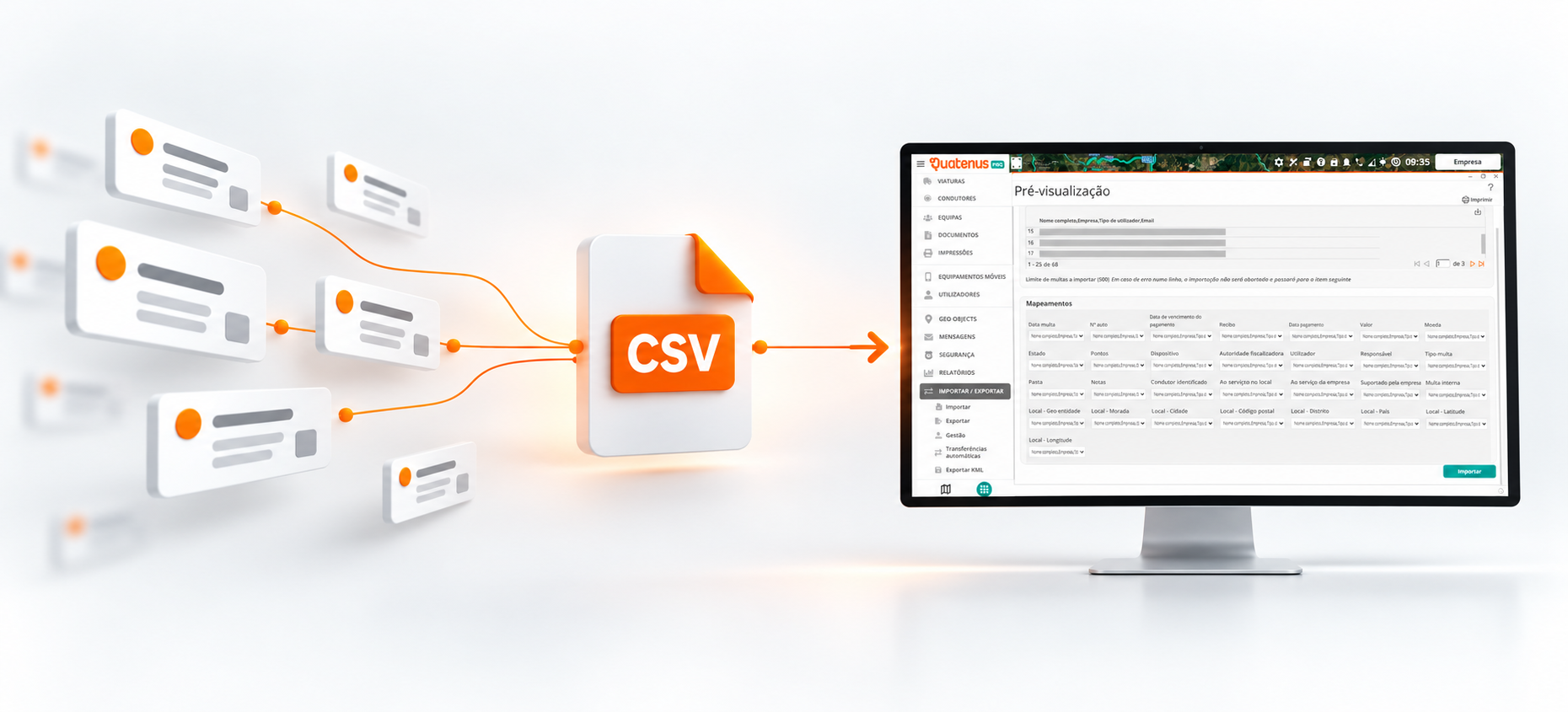
Import multiple fines at once using a CSV file and simplify information management in Quatenus.
The team can prepare a CSV file containing the fines and import them together into the system. The change addresses a specific task: instead of entering each record separately, the team has a batch import option.
This capability is particularly relevant when a set of fines needs to be recorded, as it avoids making data entry dependent on repeating the same procedure for each one.
The functionality remains useful beyond the initial data import. Once imported, fines can be viewed in the fines module and in Quatenus reports.
Imported records are available in the dedicated fines module. The team can consult this information in the system without relying exclusively on the file used for the import.
Imported fines can also be viewed in reports. This makes the records available when reviewing information in Quatenus, continuing the work that began with preparing the file.
For a team handling multiple fines, it helps to assess the complete journey of the information: how it is collected, how it enters the system and where it can be consulted afterwards. Simplifying just one of these stages can leave work outstanding elsewhere.
CSV importing addresses the entry of records; consultation in the module and reports makes them available afterwards. The benefit lies in connecting the preparation of data as a batch with its subsequent review in the platform.
When the volume of fines calls for a different approach, reducing individual data entry is a practical improvement. The team spends less effort repeating the recording task and has the information available in Quatenus for consultation and monitoring.
Reduce the work involved in entering fines and bring the records into a system where you can consult them in the module and reports.
Speak to the Quatenus specialists and request a demonstration tailored to your fleet management needs.
Ask for DemoFAQ
Batch importing allows several records to be entered together, avoiding individual data entry. In Quatenus, this import uses a CSV file.
CSV is a file format that organises data in rows and columns. In Quatenus, it allows multiple fine records to be brought together and imported into the system as a batch.
Quatenus provides a CSV import option that avoids entering fines one by one. The team can prepare several records in a file and import them as a batch.
Once imported into Quatenus, fines can be consulted in the fines module and viewed in reports.
The main benefit is reducing the repetitive work of entering each fine individually. Imported records are available in the system for consultation in the fines module and reports.